Monday, September 29, 2008

To Kill a Fairgrounds

I've shown some role models for Memphis' kind of kid-unfriendly civic leadership before, but I missed one. A big one.

Mr. Radley, Boo Radley's pop.


So mean, he got his own optical zoom.


Here he is closing the knothole to thwart the children.


In dishonor of the closing of the Mid-South Fair in Memphis.

Labels: , , , , ,

Sunday, June 29, 2008

Mini-Me-mphis

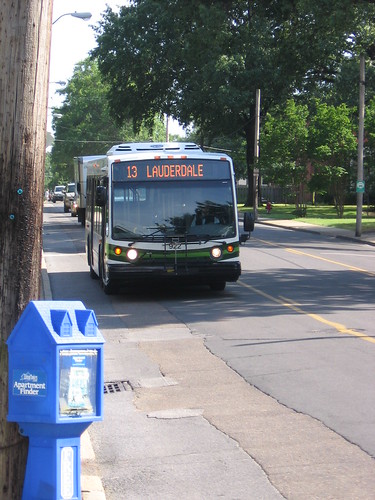
I believe the problems of MATA are Memphis' writ (not much) smaller:

Memphis Busgood people.
bad systems.

How can we have good people and bad systems? Because our leadership -- the connection between people and systems -- is broke down.

When leadership is hierarchical, incumbent, exclusivist, disconnected, unusing, unaware, uncommunicative, uncreative -- command-and-control -- it will happen. When the people who have the power to fix leadership issues don't, it will happen. Systems will decay, break, obsolesce, or never work in the first place.

Some very talented, motivated people can still build and correct great systems in world shaped like this, but systematically we will produce and maintain crappy systems.

Labels: , , ,

Wednesday, March 21, 2007

Is Memphis a Steel-Hulled Clipper Ship?

prepare to abandon ship, Mr. Aviotti!John Seely Brown spoke at the Leadership Memphis Community Breakfast of the conceptual rut -- the condition where you're so focused on the thing you've been doing that you refuse to see new patterns emerging all around you. The example he used to illustrate this was the bigger, sometimes better, but always wind-powered ships that the clipper ship industry built to ward off competition from those newfangled steamships. The race to stay competitive concluded with the Thomas W. Lawson (pictured) that not only was massive but had a steel hull. The industry mimicked an obvious but not core element of the competition, but couldn't let go of the wind power at the center of their universe.

A major conceptual rut -- nay, sinkhole -- for Memphis is command-and-control leadership. Our political, cultural and business leaders think that if they have to, they can just weld the new ideas onto Memphis' steeply hierarchic superstructure and still cruise with the competition. This has never worked for Memphis. I believe that we can trace many of Memphis' civic problems to nearly 200 years of political, cultural and business exclusion of 99% of Memphis citizens from decision-making and information-sharing.

Yet, we still do it.

By the way, the Thomas W. Lawson sank in 1907, killing everyone on board except the captain.

A lesson for Memphis.

Labels: ,

Wednesday, March 14, 2007

Can The Core Learn From The Edge?

and vice versa?

I saw John Seely Brown speak at the Leadership Memphis Community Breakfast last week. I waited 'til the last minute to register -- because of the $50 fee -- but I'm glad I went.

One of the ideas he presented to the Leaders and me was the importance of learning from the edge -- if you're going to be innovative. Now this sounds good to me, because I am at the edge.

But what about the Leaders? Do they buy Brown's idea? They don't have to -- no one made him king. But if they buy it, how do they make it happen? How do they learn from the edge? Can they learn from the edge?

Here's an idea and a test: Leadership Memphis should roll their Executive Development Program and their Grassroots Leadership Program together. The former appears composed of leaders from established businesses and organizations; the latter, DIY leaders from low- or no-funded organizations. But they're both about community leadership.

Yes, a very wonkish idea but it will prove 2 things:
  1. we can learn from our breakfast speakers.
  2. we want to learn to learn from both the edge and the core.

Labels: ,

Thursday, February 08, 2007

The Chief of Confusion to speak in Memphis

Leadership Memphis is hosting their 3rd Annual Community Leadership Breakfast on March 7. John Seely Brown, formerly Chief Scientist of Xerox Corporation and the director of its Palo Alto Research Center (PARC) and now the Chief of Confusion, is their featured speaker. According to LM's website, the topic of Mr. Brown's talk will be "innovation, particularly as it relates to economic development, community development and innovative leadership. Innovation is differentiation."

The Breakfast is open to the public. Registration is $50.

If you can't attend the breakfast, check out his website or listen to this excellent podcast interview (here are the interview notes) with Mr. Brown. The theme of the interview was the transformation of education by a participatory architecture of learning. A favorite quote from the interview:
"I always think about developing the edge, and letting the edge transform the core"
I'm looking forward to hearing his ideas on innovation and the city. I'd like to hear how we might apply the same participatory architecture to the transformation of cities, or at least innovation in cities.

Labels: ,