Tuesday, January 17, 2012

Memphis First

I had the real privilege to help with the Memphis First Robotics competition Quick Build session this past Saturday at the University of Memphis.  Students from Memphis high schools came together to begin building robots as the first part of the competition.
The instruction manual

The hardware

Students from the Memphis Academy of Science and Engineering begin work on their robot frame.

Craigmont High puts the motors on their assembled base.

Teams work on the programming and electronic components
It was wonderfully rich mix of young, middle, old, female, male, black, white, Asian, Latino, student, teacher, parent, mentor, sponsor, friend coming to together to learn, build, do, redo, make, program, share, talk, meet, eat, compete, cooperate, collaborate and create with each other.  Most surprising to me was the growing enthusiasm from the student teams as the day progressed.  By the end of the build at 4 p.m., teams from Hamilton, St. Mary's, Manassas, Craigmont and Memphis Business Academy had their basic robot going, and the rest were very much on the way.

While it was a scheduling coincidence that the build happened on the Martin Luther King birthday weekend, the event still demonstrated a great new Memphis that MLK's legacy is helping build.

Labels: , , ,

Monday, September 22, 2008

One Web Day 2008

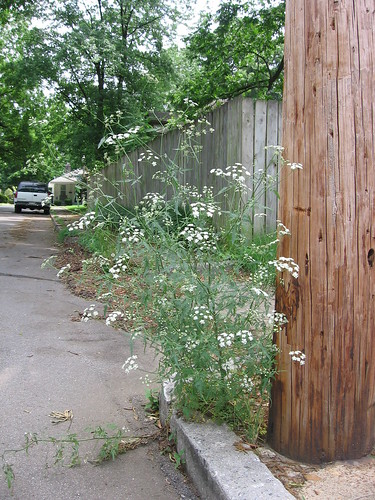
Wildflower in Cooper-YoungHappy One Web Day 2008, Memphis!

If there's one thing that excites me about the Web and its potential power in Memphis is Thesis 7 of the Cluetrain Manifesto's 95 Theses:
Hyperlinks subvert hierarchy.

Subvert, say, Memphis' particularly steep hierarchies of power and wealth, or better, the hierarchy upon which those hordings are built -- the hierarchy of communication.

What are hierarchies of communication good for? Bullshit.

So One Web Day, imho, is about Freedom from Bullshit. And that makes me happy.

Labels: , ,

Thursday, June 19, 2008

RDCRSSFTW!

The Riverfront Development Corporation has a new web site. It looks good and, more importantly, it's built on a dynamic, open-source backend -- the Wordpress blogging platform -- and has RSS turned on.

This is a progressive float forward for the Riverfront folk.

Hopefully they'll add an event feed for their calendar soon. And I bet Wordpress will allow them to map previous web pages to their new locations, so they don't lose any of their Google Juice.

(Geekery, yes, but systems are possibilities. If you have a web site that is so static that you need a programmer to update, you won't update it much unless you're a web programmer. No updates mean little communication which means less promotion and less transparency. Of course, you still have to update but for those inclined not to communicate, Wordpress takes away the ease of use excuse.)

I hereby nominate the person(s) who made this happen to tweet, blog and lead the RDC master planning process.

Huling Avenue Steps, Memphis Riverfront

Labels: , , ,

Wednesday, December 12, 2007

Love and Technology and the Possibilities of Memphis

We have always loved one another. We're human. It's something we're good at. But up until recently, the radius and half-life of that affection have been quite limited.

With love alone, you can get a birthday party together. Add coordinating tools, you can write an operating system.

In the past we would do little things for love, but big things, big things required money.

Now, we can do big things for love.


Tom Lee Statue, Memphis Riverfront

Labels: , , , ,

Sunday, September 23, 2007

Happy OneWebDay!

Today, Saturday, is OneWebDay, a celebration of online life.

For my part of the general merriment, I want to recognize several Memphis events and organizations who've used the web to make something happen, something nearly impossible without the web.

  • The Zombie Walk. Brought a huge group of people together for bloody public theater. TheoGeo, one of its principals organizers, wrote soon after:
    One of these days maybe I'll write about how MySpace was the driving force behind the huge turnout, as opposed to more traditional means of advertising (we did both, but the vast majority of people came because of MySpace).
  • Memphis Rock 'n Romp. Recurring huge turnouts made possible by web-savvy organizers using simple/free tools.

  • Memphis Digital Conversation. Not only did citizens ask the questions, all the Mayoral candidates answered. And everyone can see the results. You don't need a studio audience, or a studio, to make this happen.

  • Friends for Our Riverfront. They weren't able to stop funding for Beale Street Landing but controlled the conversation (how many times did we hear BSL referred to as a "boat dock") through their blogsite and library. To this day, you can learn more about Beale Street Landing from FfOR's website than you can from its sponsor, the Riverfront Development Corp. Dollar for dollar FfOR is the most effective non-profit in Memphis.

  • Smart City Memphis. Unique among Memphis' establishment for not only saying publicly what they believe but allowing people to talk back -- to have a conversation. Online. For the world to see and read and sometimes angrily disagree with. Beautiful.

  • The Memphis Flyer. They've successfully melded their offline and online presence in an almost textbook fashion (as the text is written by my favorite web guru).

Labels: , ,

Monday, September 17, 2007

The Conversation, Joined

From the Memphis Digital Conversation:

The free and informal conversational forum begins at 6:30 p.m. at Love Fellowship Ministries Inc., 4475 South Germantown Road (map), on Tuesday, Sept. 18.

Mediaverse and The Tri-State Defender are sponsors; Tri-State Executive Editor Dr. Karanja Ajanaku will moderate.

Labels: , ,

Monday, September 10, 2007

Transparency, Accidentally

The argument given in favor of funding a Public Affairs Officer at Juvenile Court:
...it's important for the court to have some way to communicate with the media...
Ludicrous, given that the court was communicating with the media in giving that reason. Obsolete, given the ubiquitous technological possibilities to communicate with as many people as you want and who want to listen.

Memphis doesn't need any more gatekeepers. Memphis doesn't need gatekeepers anymore. Throw the gates open!

(bonus example: important person communicating without aid of Public Affairs Officer.)

Labels: , ,

Wednesday, July 04, 2007

Questions Before We Sell Memphis Networx

Do the assets of Memphis Networx have any special potential to make Memphis a connected city? That is, if we want to provide cheap or free broadband access to our citizens (we should!), do these assets represent a big prepaid head start, or do other municipal broadband opportunities exist that would cost little more than what it would take to maintain Memphis Networx?


Are we giving away the family jewels by selling it, or has this type of infrastructure become such a commodity that it would be cheaper to sell the network, and purchase/rent any services back from an efficiently run company?

Right now, Memphis Networx feels like so many other major civic projects.
  1. vision vagueness,
  2. public relations hype,
  3. operational secrecy,
  4. underwhelming results,
  5. abandonment,
  6. repeat.
Eventually we'll have to work on 1-3; 4, however, can happen with the best laid plans. But 4 is where we have to be the most creative, to think as much like an artist as a businessman and reimagine the amplifier, before jumping straight to 5.

Abandonment may be the best path, but it should not be hasty and definitely not a consequence of its failure to fulfill vague and overblown expectations.

Labels: ,

Tuesday, July 03, 2007

Memphis is a Hole in the Wall

detail from Peabody School front entranceThe children of Memphis are brilliant.

They can do anything. They can learn anything. They can create anything.

Because they can, they should have access to the knowledge of everything. All the time.

Memphis is a Hole in the Wall.

The Hole in the Wall Experiment

In 1999 New Delhi businessman Sugata Mitra installed a public Internet-connected computer in a wall that separated his company from a nearby slum. He put it in a hole in the wall as an experiment in public use, since the wall and computer faced a slum.
What he discovered was that the most avid users of the machine were ghetto kids aged 6 to 12, most of whom have only the most rudimentary education and little knowledge of English. Yet within days, the kids had taught themselves to draw on the computer and to browse the Net. Some of the other things they learned, Mitra says, astonished him.
Mitra points this out cautiously in a 2000 interview with Business Week:
Q: What does it mean? What does it say for the potential of these slum kids? After all, being able to download music isn't enough to get them a job.
A:
I don't wish to claim that this shows anything more or less than what it has shown, which is that curious kids in groups can train themselves to operate a computer at a basic level. In doing so, they also can get a generally good idea about the nature of browsing and the nature of the Internet.... And, therefore, if they view these things as worth learning, no formal infrastructure is needed [to teach them].

But after describing an added experiment in teaching Physics, he expands the possibilities:
That's not a wow for the children, it's a wow for the Internet. It shows you what it's capable of. The slum children don't have physics teachers. But if I could make them curious enough, then all the content they need is out there. The greatest expert on earth on viscosity probably has his papers up there on the Web somewhere. Creating content is not what's important. What is important is infrastructure and access.... The teacher's job is very simple. It's to help the children ask the right questions.

Q: Are you saying that if we put computers in all the slums, slum kids could become literate on their own?
A:
I'm saying that, in situations where we cannot intervene very frequently, you can multiply the effectiveness of 10 teachers by 100- or 1,000-fold if you give children access to the Internet.
This isn't just computer skills. It's the possibility of radically transforming education. Not schools, but how, where, when and what people learn. It could be where the printing press meets electrification.

So how can we fill Memphis' Hole in the Wall?

We fill it now with the computers we place in all our libraries and schools. We can fill it even further with One Laptop Per Child (OLPC) and municipal wi-fi.

One Laptop Per Child

Although popularly known as the organization behind the $100 laptop, OLPC considers itself "an education project, not a laptop project." Their educational proposition:
It is critically important to adequately educate all the children of the emerging world. Simply doing more of the same is no longer enough, if it ever was. If their citizens are to benefit, as they should from the spread of the technology-based, global information economy, these nations must rethink the old top-down classroom paradigm, and replace it with a dynamic learning model that leverages the children themselves, turning them into “teachers” as well as "learners.” The tool with which to unlock their enormous potential is the XO. Put this ultra-low-cost, powerful, rugged and versatile laptop in their hands, and the kids will do the rest.

More from their mission:

XO embodies the theories of constructionism first developed by MIT Media Lab Professor Seymour Papert in the 1960s, and later elaborated upon by Alan Kay, complemented by the principles articulated by Nicholas Negroponte in his book, Being Digital.

Extensively field-tested and validated among some of the poorest and most remote populations on earth, constructionism emphasizes what Papert calls “learning learning” as the fundamental educational experience. A computer uniquely fosters learning learning by allowing children to “think about thinking”, in ways that are otherwise impossible. Using the XO as both their window on the world, as well as a highly programmable tool for exploring it, children in emerging nations will be opened to both illimitable knowledge and to their own creative and problem-solving potential.

This is not about welding a new tool on to our educational system.

Municipal Wi-Fi

Access to the Internet is a fundamental part of the Hole in the Wall experiment. Connection is a core principle of OLPC.

The connectivity will be as ubiquitous as the formal or informal learning environment permits. We are proposing a new kind of school, an “expanded school” which grows well beyond the walls of the classroom. And last but not least this connectivity ensures a dialogue among generations, nations and cultures. Every language will be spoken in the OLPC network.

We need ubiquitous connection if we're to fill Memphis' Hole in the Wall. The OLPC laptops build a mesh network, even when turned off, providing neighborhood connectivity. If even one is connected to the Internet, the neighborhood mesh connects them all. Muni wifi is the surest way to connect the mesh and our children to the knowledge of the Internet so they can learn and build upon it.

It wasn't long ago that muni wi-fi would have been a tube dream -- the cost would have been too great. But the cost of the infrastructure and bandwidth decreases per second. Plus, we have an advantage by slowly and belatedly adopting technology -- its cost drops rapidly as the tech spreads beyond early adopters, becoming more of a interchangeable commodity and less of a proprietary gadget.

A commodity wouldn't seem to give Memphis a competitive advantage. Untrue! Memphis biggest competitor, foe, opponent, enemy, has always been Memphis. Our embrace of ignorance, fear, limits, and destruction (with an occasional manic swing to desperately ameliorative civic boosterism) is the real competition.

Commoditizing education and connection gives us great advantage over this competitor

This could be an application of low-cost and connected technology to Memphis' creative and human possibility.

Labels: , , , , ,

Wednesday, June 27, 2007

Where did Memphis Networx Go Wrong?

"The first decision we made, which quite frankly was the most important -- we created a non-profit. It was absolutely critical that we were a non-profit so that the clarity of purpose was just impeccable."

Labels: , ,

Tuesday, February 27, 2007

Season's Greetings from Chinatown!

A couple of weeks ago, I was up on my roof taking down my Christmas lights1. I was almost finished when I noticed this blemish in the relatively new shingles.


I thought at first that it was some kind of fastener that the roofers had put in. But it was pretty wide and pretty exposed and definitely unlike anything else I could see on the roof. So I got a knife to inspect it and it came out pretty easy. And as I had begun to suspect, it was a bullet.


I'm pretty sure it wasn't there when I put the lights up in early December. So my guess is it landed on my roof on New Year's Eve. Shot by one of the idiots you hear firing bursts in the remote distance.

Which brings me to the title of my post. For a number of years, I've heard those bursts but never done anything about it. It made me mad but figured if I called the police, I would get a "Forget it, Jake. It's Chinatown." response, phrased by a bureaucrat in blue rather than Robert Towne. That was my fault. By doing nothing, I said it, not the imagined police officer. I should have given the police a chance to do something, which I didn't.

But isn't it Chinatown?

Hell no, it's not Chinatown! We're a major city in a major nation in the early 21st century. And as a collateral effect of our nation's spending so much on the military, we now have all these technologies in the public sphere that developed first in the military. One such is gunshot location -- a way to pinpoint the location of gunshot.

Before I start sounding like I know what I'm talking about, let me say that I didn't know that such technologies even existed when I dug the bullet out. I could have imagined, but didn't know. 'til then I thought police would just have to wait around and listen real good to catch the idiots. Luckily I had a friend who had heard about London using gunshot location.

Anyway, maybe this technology is the kind of thing that MATAlac was referring to:
...I think the root problem is that Memphis doesn't realize that all of these ills have been vaccinated in other places. Our leaders attend these national conferences and meet with people who have solved these problems, yet they don't apply them here.
I'm not such an idiot that I believe gunshot location technology will cure our crime problems. But, it could be part of a crime-fighting cocktail.

Therefore my 2007 New Year's Eve (or before) Resolutions:
  1. I'm going to send a letter, complete with pictures, to my Mayors plus my City Council Person, Carol Chumney, and ask that they consider this technology.
  2. Next time I hear celebratory gunfire I'm going to call the police and leave Chinatown behind.


1Yes, it reads pretty bad that I was taking down my Christmas lights in early February. It is. But that very same day, I saw 2 Christmas trees lying curbside outside 2 different houses. I swear!

Labels: ,

Friday, February 16, 2007

Blame it on HAL

If you want to do something unpopular, blame it on HAL.

HAL's a perfect fall-guy. All his life he's been a mysterious and shameless gold-digger and henchman.

But HAL is changing. He is helping pull back the curtains that obscure the real machinations, the schemes that require a fall-guy like HAL.

He might even help Memphis make the evolutionary leap from a disastrous hierarchic past.

In the future, when they try to blame HAL, we won't believe them.

STFU, Dave

Labels: ,